Adv Diploma Level 8 Executive Beauty Industry Cosmetology & Beauty Therapy

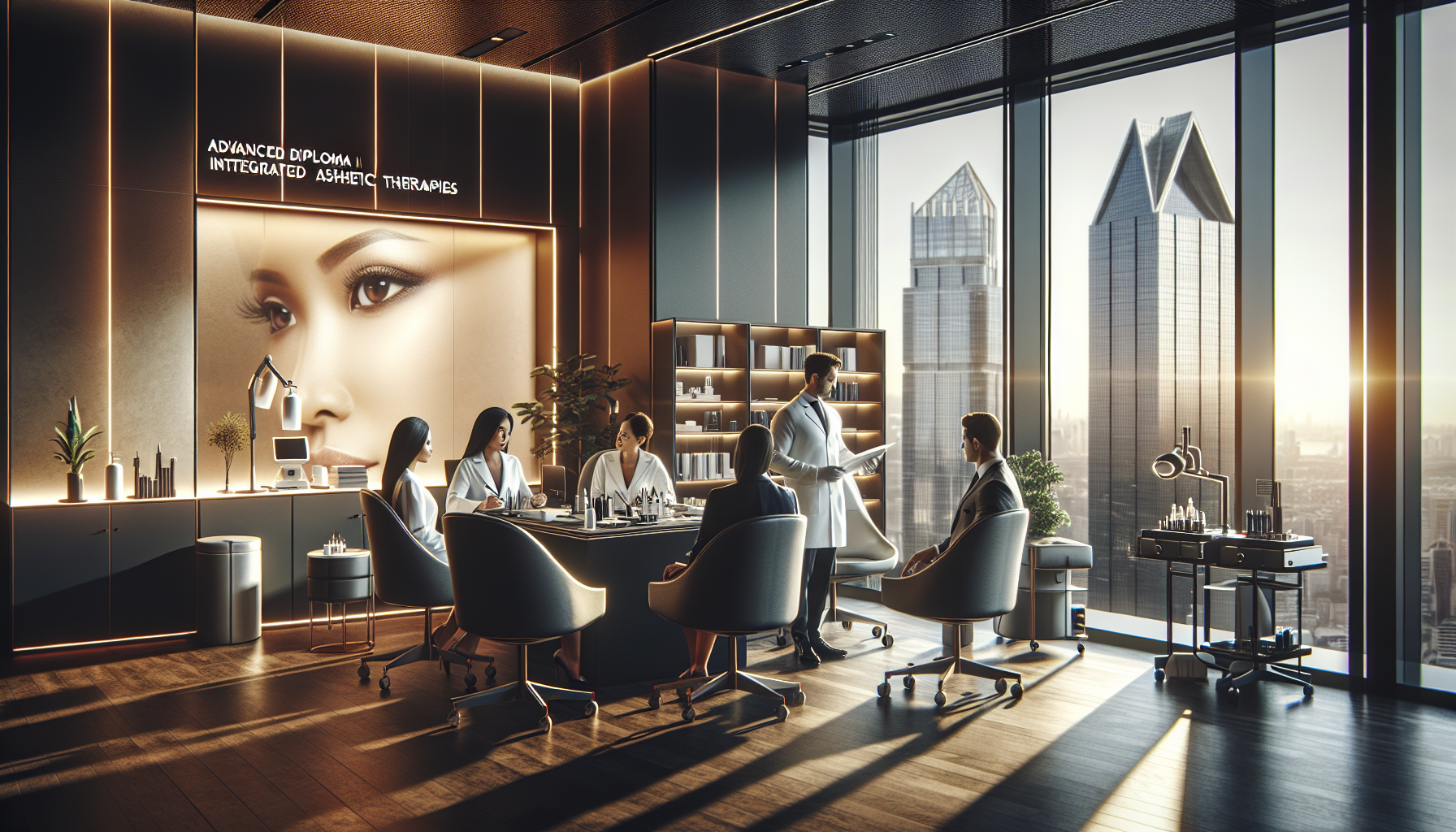
Advanced Diploma in Integrated Aesthetic Therapies

Executive Level

6 Subjects
30 Chapters
180 Lessons
500 Marks

LAPT — London Academy of Professional Training

Advanced Diploma in Integrated Aesthetic Therapies
Adv Diploma Level 8
  • BE-CBT-E
  • Executive Stage
  • 500 total marks
  • Pass: 350 marks (70%)
  • Validity: Lifetime
Enrol Now View Brochure
AwardAdv Diploma
Global LevelLevel 8
Total Marks500
Pass Mark350 (70%)
Subjects6
Chapters30
Classes180

About This Certification

Who Is This For?

Designed for senior beauty professionals and aestheticians with significant experience aiming to expand their expertise and lead within the cosmetics and therapy sectors.

Course Curriculum

6 subjects • 30 chapters • 180 classes
01
Innovation in Aesthetic Treatments
5 chapters • 30 classes • 100 marks • 40h
Emerging Technologies in Aesthetic Treatments 6 classes
1.1 Understanding Emerging Technologies in Aesthetics
1.2 Exploring Innovations in Cosmetic Laser Treatments
1.3 Evaluating Advances in Non-Invasive Skin Procedures
1.4 Analyzing the Role of Artificial Intelligence in Aesthetic Therapies
1.5 Investigating Nanotechnology Applications in Skin Care
1.6 Applying Virtual Reality for Enhanced Client Consultations
Formulations and Active Ingredients in Skincare Products 6 classes
2.1 Exploring the Basics of Skincare Formulations
2.2 Examining Key Active Ingredients in Skincare
2.3 Understanding the Role of Emulsifiers and Preservatives
2.4 Analyzing the Efficacy of Natural vs. Synthetic Ingredients
2.5 Evaluating Formulation Stability and Shelf Life
2.6 Applying Formulation Concepts to Develop Custom Skincare Products
Non-Invasive Facial and Body Contouring Techniques 6 classes
3.1 Understanding Non-Invasive Techniques for Contouring
3.2 Exploring Facial Contouring Technology
3.3 Analyzing Body Contouring Equipment and Their Uses
3.4 Comparing Innovative Methods for Sculpting Effects
3.5 Evaluating Client Suitability and Treatment Outcomes
3.6 Implementing Non-Invasive Techniques in Practice
AI and Digital Tools in Personalized Aesthetic Treatments 6 classes
4.1 Understanding AI in Aesthetic Treatments
4.2 Exploring Digital Tools for Facial Analysis
4.3 Implementing Machine Learning for Skin Type Customization
4.4 Analyzing Data-Driven Personalized Treatment Plans
4.5 Assessing AI Impact on Treatment Outcomes
4.6 Integrating AI Tools with Traditional Techniques
Sustainability and Ethical Innovations in Aesthetic Therapies 6 classes
5.1 Understanding Sustainability in Aesthetic Therapies
5.2 Identifying Ethical Considerations in Treatment Development
5.3 Exploring Eco-Friendly Ingredients and Materials
5.4 Evaluating Sustainable Business Practices in Aesthetics
5.5 Integrating Ethical Innovations into Treatment Protocols
5.6 Designing Eco-Conscious Client Treatment Plans
02
Regulation and Safety Compliance
5 chapters • 30 classes • 75 marks • 30h
Understanding Regulatory Frameworks in Aesthetic Therapies 6 classes
1.1 Exploring Key Regulatory Bodies in Aesthetic Therapies
1.2 Understanding Legal Requirements and Licensing for Practitioners
1.3 Analyzing Health and Safety Standards for Aesthetic Treatments
1.4 Examining Client Consent and Confidentiality Protocols
1.5 Navigating Marketing and Advertising Regulations
1.6 Applying Regulation Knowledge to Case Studies in Aesthetic Practices
Health and Safety Standards in Cosmetology Practices 6 classes
2.1 Understanding Health and Safety Legislation in Cosmetology
2.2 Identifying Common Cosmetology Hazards
2.3 Implementing Effective Safety Protocols
2.4 Managing Client Health and Safety Expectations
2.5 Evaluating Risk Assessments in Beauty Treatments
2.6 Ensuring Continuous Compliance with Safety Regulations
Risk Assessment and Management in Beauty Treatments 6 classes
3.1 Understanding Risk: Identifying Potential Hazards in Beauty Treatments
3.2 Analyzing Impact: Assessing the Severity of Risks
3.3 Implementing Precautions: Developing Mitigation Strategies
3.4 Legal Frameworks: Navigating Regulations and Compliance in Beauty
3.5 Safety Protocols: Establishing Standard Operating Procedures
3.6 Continuous Improvement: Monitoring and Reviewing Risk Management Plans
Client Consultation and Informed Consent Procedures 6 classes
4.1 Understanding the Importance of Client Consultations
4.2 Identifying Key Components of a Client Consultation
4.3 Evaluating Client Needs and Expectations
4.4 Crafting Effective Informed Consent Documents
4.5 Communicating Risks and Benefits Clearly
4.6 Ensuring Legal and Ethical Compliance in Consultations
Adhering to Ethical Standards and Professional Conduct 6 classes
5.1 Understanding Ethical Standards in Aesthetic Therapies
5.2 Exploring the Code of Conduct for Aesthetic Professionals
5.3 Identifying Common Ethical Dilemmas in Practice
5.4 Implementing Ethical Decision-Making Frameworks
5.5 Developing Professional Boundaries with Clients
5.6 Applying Ethical Standards to Enhance Client Trust
03
Client Consultation and Relationship Management
5 chapters • 30 classes • 75 marks • 30h
Understanding Client Needs and Expectations 6 classes
1.1 Identifying Core Client Needs
1.2 Exploring Client Expectations in Aesthetic Services
1.3 Techniques for Effective Client Listening
1.4 Analyzing Client Feedback for Improved Services
1.5 Building Trust and Rapport Through Consultation
1.6 Developing Strategies to Exceed Client Expectations
Effective Communication Techniques 6 classes
2.1 Understanding Communication: Fundamental Concepts and Importance
2.2 Exploring Non-Verbal Communication: Reading and Using Body Language
2.3 Mastering Active Listening Skills: Techniques for Effective Engagement
2.4 Tailoring Communication: Adapting to Diverse Client Needs and Situations
2.5 Overcoming Barriers: Strategies for Clear and Concise Client Interactions
2.6 Building Trust: Cultivating Positive Client Relationships through Empathy
Consultation Protocols and Best Practices 6 classes
3.1 Understanding the Importance of Client Consultations
3.2 Identifying Key Components of Effective Consultation Protocols
3.3 Developing Active Listening Skills for Aesthetic Therapists
3.4 Applying Empathy and Building Rapport with Clients
3.5 Tailoring Consultation Techniques to Individual Client Needs
3.6 Evaluating and Refining Consultation Practices
Managing Client Relationships and Expectations 6 classes
4.1 Understanding Client Needs and Expectations
4.2 Building Trust and Rapport with Clients
4.3 Effective Communication Techniques in Aesthetic Consultations
4.4 Tailoring Services to Meet Client Goals
4.5 Managing Client Feedback and Adjustments
4.6 Sustaining Long-term Client Relationships
Handling Client Feedback and Conflict Resolution 6 classes
5.1 Understanding the Importance of Client Feedback
5.2 Developing Skills to Encourage Constructive Feedback
5.3 Analyzing and Categorizing Client Feedback Effectively
5.4 Strategies for Addressing Negative Feedback Promptly
5.5 Techniques to Resolve Client Conflicts Amicably
5.6 Implementing Feedback to Enhance Client Relationships
04
Strategic Beauty Business Management
5 chapters • 30 classes • 75 marks • 30h
Understanding the Beauty Industry Landscape 6 classes
1.1 Exploring the Global Beauty Industry Landscape
1.2 Identifying Key Market Trends and Consumer Preferences
1.3 Analyzing Competitive Forces Shaping the Beauty Sector
1.4 Understanding Regulatory and Ethical Considerations
1.5 Evaluating Technological Advancements Impacting Beauty Businesses
1.6 Formulating Strategic Responses to Industry Challenges
Strategic Planning for Beauty Enterprises 6 classes
2.1 Understanding Strategic Planning in Beauty Enterprises
2.2 Identifying Market Trends and Opportunities
2.3 Analyzing Competitive Landscapes in the Beauty Industry
2.4 Developing a Vision and Mission Statement
2.5 Crafting Strategic Goals and Objectives
2.6 Implementing and Monitoring Strategic Plans
Operational Excellence in Beauty Services 6 classes
3.1 Understanding Operational Excellence in the Beauty Industry
3.2 Implementing Quality Assurance Standards in Beauty Services
3.3 Streamlining Processes for Optimal Client Experience
3.4 Leveraging Technology to Enhance Service Delivery
3.5 Managing Resources Efficiently for Business Success
3.6 Measuring Performance and Driving Continuous Improvement
Advanced Marketing Strategies for Beauty Brands 6 classes
4.1 Understanding the Core Principles of Beauty Marketing
4.2 Identifying Target Markets and Consumer Personas
4.3 Crafting a Unique Value Proposition for Beauty Brands
4.4 Utilizing Digital Platforms for Enhanced Brand Visibility
4.5 Implementing Data-Driven Marketing Strategies
4.6 Measuring and Optimizing Marketing Campaign Performance
Financial Management and Growth Strategies 6 classes
5.1 Understanding Financial Statements in Aesthetic Practices
5.2 Analyzing Budgeting Techniques for Sustained Growth
5.3 Implementing Cost Control Measures in Beauty Businesses
5.4 Exploring Revenue Streams in the Aesthetic Industry
5.5 Developing Financial Strategies for Expansion
5.6 Evaluating Investment Opportunities in Beauty Ventures
05
Non-Surgical Aesthetic Procedures
5 chapters • 30 classes • 100 marks • 40h
Fundamentals of Non-Surgical Aesthetic Techniques 6 classes
1.1 Understanding Non-Surgical Aesthetic Innovations
1.2 Exploring Skin Anatomy and Its Role in Aesthetics
1.3 Identifying Key Techniques in Non-Surgical Aesthetics
1.4 Analyzing the Benefits and Limitations of Non-Surgical Procedures
1.5 Assessing Client Needs for Personalized Treatment Plans
1.6 Implementing Best Practices for Safe Non-Surgical Applications
Skin Anatomy and Physiology for Aesthetic Applications 6 classes
2.1 Explore: The Structure and Functions of Skin Layers
2.2 Analyze: The Role of Skin Cells in Aesthetic Treatments
2.3 Understand: Circulatory and Nervous Systems in Skin Physiology
2.4 Examine: Skin Receptors and Their Impact on Treatment Efficacy
2.5 Evaluate: Skin Types and Conditions for Tailored Therapies
2.6 Apply: Integrating Anatomy Knowledge for Effective Procedures
Chemical Peels and Microdermabrasion Techniques 6 classes
3.1 Understanding Chemical Peel Ingredients and Their Functions
3.2 Identifying Skin Types and Conditions for Peeling
3.3 Demonstrating Basic Chemical Peel Application Techniques
3.4 Exploring Microdermabrasion Equipment and Use
3.5 Assessing Contraindications and Precautions in Treatments
3.6 Evaluating Post-Treatment Care and Client Follow-up Strategies
Advanced Injectable Treatments: Fillers and Toxins 6 classes
4.1 Understanding Facial Anatomy for Injectable Treatments
4.2 Exploring Types and Properties of Dermal Fillers
4.3 Mastering Toxin Mechanisms and Effects
4.4 Practicing Advanced Injection Techniques
4.5 Analyzing Safety Protocols and Risk Management
4.6 Evaluating Outcomes and Patient Satisfaction
Laser and Light-Based Therapies in Aesthetic Practice 6 classes
5.1 Understanding the Science of Laser and Light Technologies
5.2 Exploring Different Types of Laser and Light Devices
5.3 Recognizing Skin Types and Conditions for Laser Treatment
5.4 Ensuring Safety and Efficacy in Light-Based Procedures
5.5 Identifying Indications and Contraindications for Treatments
5.6 Implementing Post-Treatment Care and Follow-Up Protocols
06
Advanced Skin Science
5 chapters • 30 classes • 75 marks • 30h
Foundations of Dermatology and Physiology of the Skin 6 classes
1.1 Understanding Skin Anatomy: Layers and Functions
1.2 Exploring Cellular Structure: Epidermal and Dermal Cells
1.3 Analyzing Skin Physiology: Circulation and Nutrition
1.4 Identifying Skin Disorders: Common Conditions and Causes
1.5 Examining the Ageing Process: Effects on Skin Health
1.6 Applying Diagnostic Techniques: Tools for Skin Analysis
Skin Assessment and Diagnostic Techniques 6 classes
2.1 Understanding Skin Types and Conditions
2.2 Identifying Skin Concerns Through Observation
2.3 Conducting a Manual Skin Examination
2.4 Utilizing Diagnostic Tools in Skin Assessment
2.5 Interpreting Skin Analysis Results
2.6 Integrating Diagnostic Insights into Treatment Plans
Skin Pathologies and Disorders 6 classes
3.1 Understanding Common Skin Disorders: An Overview
3.2 Identifying Symptoms and Causes of Acne and Rosacea
3.3 Exploring Fungal and Bacterial Skin Infections
3.4 Assessing Pigmentation Disorders: Hypo- and Hyperpigmentation
3.5 Analyzing Inflammatory Skin Conditions: Eczema and Psoriasis
3.6 Applying Treatment Strategies for Skin Pathologies
Advanced Cosmetic Ingredients and Their Effects on Skin Health 6 classes
4.1 Explore the Role of Active Ingredients in Skin Care
4.2 Analyze the Impact of Antioxidants on Skin Health
4.3 Understand the Benefits and Risks of Chemical Exfoliants
4.4 Compare Natural vs Synthetic Ingredients in Cosmetics
4.5 Investigate the Science Behind Hydrating Agents
4.6 Evaluate the Effects of Preservatives in Skin Care Products
Innovative Aesthetic Procedures and Technology 6 classes
5.1 Understanding Innovative Aesthetic Technologies
5.2 Exploring the Mechanisms of Laser Treatments
5.3 Evaluating the Benefits of Radiofrequency Devices
5.4 Investigating the Role of Ultrasound in Skincare
5.5 Analyzing the Impact of Cryotherapy on Skin
5.6 Applying Safety Protocols in Advanced Procedures

Assessment & Grading

Assessment Methods
  • Written Examination
  • Practical Assignment
  • Portfolio Assessment
Theory
50%
Practical
35%
Project
15%
Advanced Diploma in Integrated Aesthetic Therapies
Adv Diploma Level 8
  • BE-CBT-E
  • Executive Stage
  • 500 total marks
  • Pass: 350 (70%)
  • Validity: Lifetime
  • Beauty Industry
Enrol Now View Brochure
Enrol Now

Related Certifications


Chat with us Chat with us