Adv Certificate Level 4-5 Practitioner Beauty Industry Massage, Spa and Wellness

Advanced Certificate in Specialized Massage Techniques

Practitioner Level

6 Subjects
30 Chapters
180 Lessons
500 Marks

LAPT — London Academy of Professional Training
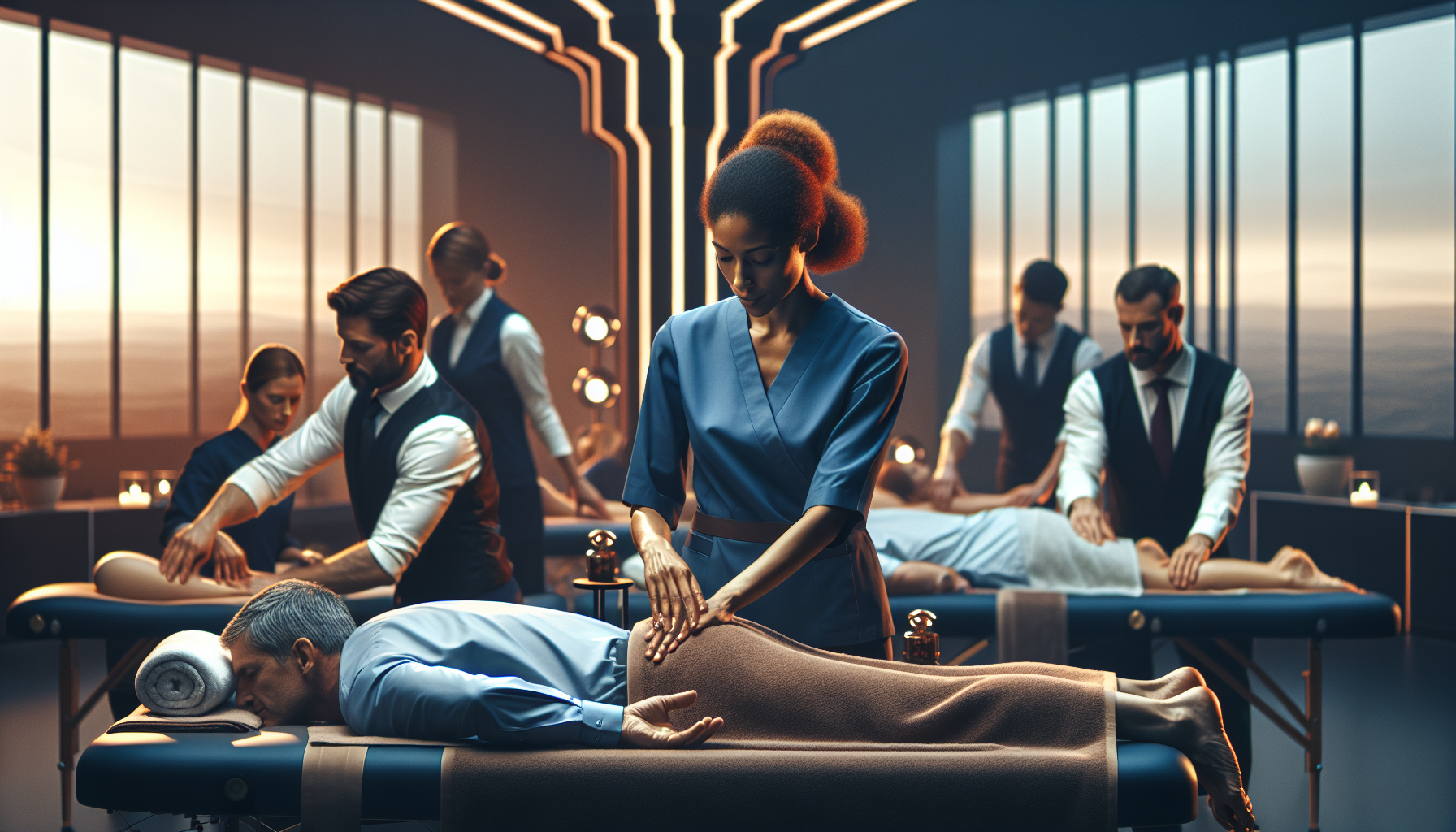
Advanced Certificate in Specialized Massage Techniques
Adv Certificate Level 4-5
  • BE-MSW-P
  • Practitioner Stage
  • 500 total marks
  • Pass: 300 marks (60%)
  • Validity: Lifetime
Enrol Now View Brochure
AwardAdv Certificate
Global LevelLevel 4-5
Total Marks500
Pass Mark300 (60%)
Subjects6
Chapters30
Classes180

About This Certification

Who Is This For?

This certification is designed for current massage practitioners and wellness therapists with foundational experience, seeking to specialise further in advanced techniques to enhance their professional practice and client offerings.
Course Curriculum

6 subjects • 30 chapters • 180 classes
01
Research and Current Trends in Massage Therapy
5 chapters • 30 classes • 50 marks • 20h
Understanding the Evolution of Massage Therapy 6 classes
1.1 Exploring Historical Roots of Massage Therapy
1.2 Analyzing Key Developments in Massage Techniques
1.3 Understanding Cultural Influences on Massage Practices
1.4 Examining Pioneers and Innovators in Massage Therapy
1.5 Investigating Emerging Trends in Massage Therapy
1.6 Evaluating Future Directions and Innovations in Massage
Analyzing Scientific Research in Massage Therapy 6 classes
2.1 Exploring the Fundamentals of Scientific Research in Massage
2.2 Identifying Reliable Sources of Massage Therapy Studies
2.3 Evaluating Methodologies in Massage Therapy Research
2.4 Analyzing Data and Results in Massage Therapy Studies
2.5 Understanding the Impact of Recent Trends in Massage Research
2.6 Applying Scientific Research to Enhance Massage Practice
Exploring Contemporary Trends and Innovations 6 classes
3.1 Understanding Key Innovations in Massage Therapy
3.2 Investigating the Impact of Technology on Massage Practices
3.3 Analyzing Evidence-Based Research in New Massage Techniques
3.4 Exploring Holistic Approaches in Contemporary Massage
3.5 Evaluating Trends in Client Preferences and Expectations
3.6 Applying Current Innovations to Enhance Therapeutic Outcomes
Ethical Considerations and Professional Development 6 classes
4.1 Understanding Ethical Frameworks in Massage Therapy
4.2 Identifying Boundaries and Dual Relationships in Practice
4.3 Handling Client Confidentiality and Consent
4.4 Navigating Cultural Sensitivity in Diverse Clientele
4.5 Engaging in Reflective Practice for Professional Growth
4.6 Leveraging Professional Development Opportunities
Market Analysis and Client-Centric Approaches 6 classes
5.1 Understanding the Massage Therapy Market Landscape
5.2 Analyzing Emerging Trends in Massage Therapy
5.3 Identifying Client Needs and Preferences
5.4 Implementing Client-Centric Massage Techniques
5.5 Evaluating Market Opportunities for New Therapies
5.6 Adapting to Consumer Feedback for Enhanced Service Delivery
02
Professional Ethics and Client Care
5 chapters • 30 classes • 50 marks • 20h
Understanding Professional Ethics in Massage Therapy 6 classes
1.1 Defining Professional Ethics in Massage Therapy
1.2 Identifying Core Ethical Principles and Standards
1.3 Exploring Ethical Decision-Making Processes
1.4 Recognizing and Managing Conflicts of Interest
1.5 Establishing Professional Boundaries with Clients
1.6 Applying Ethical Standards in Real-World Scenarios
Maintaining Client Confidentiality and Data Protection 6 classes
2.1 Understanding Client Confidentiality: Key Principles and Regulations
2.2 Identifying Confidential Client Information in Practice
2.3 Implementing Data Protection Strategies and Secure Handling
2.4 Navigating Legal Obligations and Ethical Responsibilities
2.5 Managing Client Data Breaches and Ethical Violations
2.6 Cultivating Client Trust and Practicing Ethical Communication
Effective Communication and Building Client Relationships 6 classes
3.1 Understanding the Fundamentals of Client-Centered Communication
3.2 Mastering Active Listening Skills in Client Interactions
3.3 Implementing Empathy to Foster Strong Client Relationships
3.4 Developing Emotional Intelligence for Effective Client Engagement
3.5 Navigating Difficult Conversations with Professionalism and Care
3.6 Applying Communication Strategies to Enhance Client Trust and Retention
Client Care Protocols and Professional Boundaries 6 classes
4.1 Understanding the Importance of Client Care Protocols
4.2 Identifying Professional Boundaries in Massage Therapy
4.3 Developing Effective Communication Skills with Clients
4.4 Implementing Ethical Standards in Client Interactions
4.5 Navigating Challenging Client Scenarios Professionally
4.6 Applying Client Feedback to Enhance Service Quality
Ethical Decision Making and Conflict Resolution 6 classes
5.1 Understanding Ethical Principles in Massage Therapy
5.2 Identifying Ethical Dilemmas in Client Interactions
5.3 Analyzing Ethical Decision-Making Models
5.4 Applying Ethical Frameworks to Real-World Scenarios
5.5 Developing Skills for Collaborative Conflict Resolution
5.6 Evaluating Outcomes of Ethical Decisions and Resolutions
03
Holistic Wellness Practices
5 chapters • 30 classes • 100 marks • 20h
Principles of Holistic Wellness 6 classes
1.1 Understanding Holistic Wellness
1.2 Exploring the Mind-Body Connection
1.3 Identifying Elements of Holistic Health
1.4 Analyzing the Benefits of Holistic Practices
1.5 Integrating Holistic Approaches in Daily Life
1.6 Applying Holistic Wellness in Massage Techniques
Integrating Body and Mind Techniques 6 classes
2.1 Understanding Mind-Body Connection
2.2 Exploring Breathing Techniques for Relaxation
2.3 Practicing Mindful Movement Methods
2.4 Applying Visualization Techniques in Massage
2.5 Integrating Meditation into Holistic Therapy
2.6 Developing Personalized Mind-Body Wellness Plans
Energy-Based Healing Modalities 6 classes
3.1 Understanding the Principles of Energy-Based Healing
3.2 Exploring the Human Energy Field
3.3 Identifying Key Energy Points and Meridians
3.4 Practicing Basic Energy Alignment Techniques
3.5 Integrating Energy Work into Massage Practices
3.6 Evaluating Client Responses to Energy-Based Methods
Aromatherapy and Herbal Applications 6 classes
4.1 Understanding Aromatherapy: Concepts and Benefits
4.2 Identifying Essential Oils and Their Uses
4.3 Exploring Herbal Remedies: Applications and Safety
4.4 Blending Essential Oils for Targeted Therapies
4.5 Integrating Aromatherapy into Holistic Massage Practices
4.6 Evaluating Client Needs for Customized Aromatherapy Solutions
Personalized Holistic Treatment Planning 6 classes
5.1 Understanding the Principles of Personalized Holistic Treatment
5.2 Identifying Client Needs and Preferences in Holistic Wellness
5.3 Integrating Modalities: Crafting Tailored Treatment Plans
5.4 Utilizing Holistic Assessment Tools in Treatment Planning
5.5 Balancing Techniques for Optimal Client Outcomes
5.6 Evaluating and Adjusting Treatment Plans for Continuous Improvement
04
Client Assessment and Customisation
5 chapters • 30 classes • 75 marks • 15h
Foundations of Client Assessment in Massage Practice 6 classes
1.1 Understanding the Importance of Client Assessment
1.2 Identifying Client Needs and Goals
1.3 Gathering Comprehensive Client Histories
1.4 Performing a Physical Assessment with Precision
1.5 Analyzing Data to Develop a Treatment Plan
1.6 Customizing Massage Techniques Based on Assessment
Understanding Anatomy and Physiology for Customized Massage 6 classes
2.1 Explore the Basics of Human Anatomy for Massage
2.2 Identify Major Muscle Groups and Their Functions
2.3 Understand the Circulatory and Nervous Systems in Massage
2.4 Analyze How Skeletal Structure Affects Massage Techniques
2.5 Assess Client Posture and Movement for Tailored Massage
2.6 Develop Customized Massage Plans Based on Physiological Needs
Techniques for Conducting Detailed Client Consultations 6 classes
3.1 Understanding the Importance of Client Consultations
3.2 Identifying Key Client Information for Customisation
3.3 Developing Effective Communication Techniques
3.4 Conducting Initial Needs Assessments
3.5 Creating a Personalized Massage Plan
3.6 Evaluating and Adjusting Client Plans Post-Session
Developing Personalized Massage Protocols 6 classes
4.1 Understanding Client Needs and Preferences
4.2 Analyzing Client Health History
4.3 Identifying Therapeutic Goals
4.4 Designing Tailored Massage Protocols
4.5 Selecting Appropriate Techniques for Individuals
4.6 Evaluating and Adjusting Massage Plans
Evaluating and Adjusting Customized Massage Treatments 6 classes
5.1 Understanding the Principles of Customized Massage
5.2 Identifying Client Needs and Preferences
5.3 Conducting Comprehensive Client Assessments
5.4 Interpreting Assessment Outcomes for Treatment Design
5.5 Developing a Custom Massage Plan
5.6 Adjusting Massage Techniques Based on Client Feedback
05
Specialised Massage Techniques
5 chapters • 30 classes • 125 marks • 25h
Understanding the Principles of Specialized Massage Techniques 6 classes
1.1 Explore the History and Evolution of Specialized Massage
1.2 Understand the Physiological Effects of Massage Techniques
1.3 Differentiate Between Various Specialized Massage Modalities
1.4 Identify Indications and Contraindications for Specialized Massage
1.5 Analyze the Role of Body Mechanics in Effective Massage
1.6 Apply Specialized Massage Techniques to Specific Conditions
Anatomy and Physiology for Targeted Massage 6 classes
2.1 Understanding the Musculoskeletal System in Massage
2.2 Exploring the Role of Circulatory and Nervous Systems
2.3 Identifying Key Muscles for Targeted Techniques
2.4 Analyzing Body Posture and Alignment
2.5 Recognizing Stress Points and Tension Areas
2.6 Applying Anatomy Knowledge to Tailored Massage Practices
Techniques for Therapeutic and Relaxation Purposes 6 classes
3.1 Exploring Deep Tissue Massage Techniques
3.2 Understanding Aromatherapy Massage Benefits
3.3 Mastering Trigger Point Therapy for Pain Relief
3.4 Implementing Reflexology for Holistic Well-being
3.5 Applying Swedish Massage for Relaxation
3.6 Customizing Massage Techniques for Individual Needs
Integrating Aromatherapy and Hot Stone Techniques 6 classes
4.1 Exploring Aromatherapy: Understanding Essential Oils
4.2 Mastering Hot Stone Basics: Tools and Preparation
4.3 Blending Aromatherapy with Massage: Creating Synergistic Effects
4.4 Techniques for Hot Stone Massage: Placement and Movement
4.5 Integrating Aromatherapy in Hot Stone Sessions: Best Practices
4.6 Applying Safety and Contraindications: Ensuring Client Comfort
Advanced Customization and Client Care 6 classes
5.1 Understanding the Principles of Customization in Massage Therapy
5.2 Assessing Client Needs and Preferences
5.3 Designing a Tailored Massage Plan
5.4 Implementing Advanced Techniques for Personalization
5.5 Evaluating Client Feedback and Adjusting Techniques
5.6 Maintaining Client Relationships for Long-Term Care
06
Advanced Anatomy for Massage
5 chapters • 30 classes • 100 marks • 20h
Chapter 1 — Musculoskeletal System in Massage Therapy 6 classes
1.1 Understanding the Musculoskeletal System: A Foundation for Massage
1.2 Identifying Key Bones and Muscles in Human Anatomy
1.3 Exploring Joint Mechanics and Range of Motion
1.4 Examining Muscle Attachments and Their Functions
1.5 Analyzing Common Musculoskeletal Conditions in Clients
1.6 Applying Anatomical Knowledge to Massage Techniques
Chapter 2 — Nervous System Integration With Massage Techniques 6 classes
2.1 Understanding the Nervous System's Role in Massage
2.2 Mapping Nervous System Pathways Relevant to Massage
2.3 Analyzing the Effects of Massage on Sensory Nerves
2.4 Exploring the Interaction Between Motor Neurons and Massage Techniques
2.5 Applying Techniques to Modulate Autonomic Nervous System Responses
2.6 Integrating Advanced Nervous System Knowledge into Massage Practice
Chapter 3 — Circulatory and Lymphatic Systems in Massage 6 classes
3.1 Explore: Understanding Circulatory System Anatomy
3.2 Examine: The Role of the Heart in Circulation
3.3 Analyze: Blood Vessels and Their Functions
3.4 Discover: Anatomy and Function of the Lymphatic System
3.5 Evaluate: Interactions Between Circulatory and Lymphatic Systems
3.6 Apply: Techniques to Support Circulatory and Lymphatic Health in Massage
Chapter 4 — Functionality and Pathology of Connective Tissues 6 classes
4.1 Understanding the Composition of Connective Tissues
4.2 Exploring the Functions of Connective Tissues in the Body
4.3 Identifying Common Pathologies of Connective Tissues
4.4 Analyzing the Impact of Connective Tissue Disorders on Mobility
4.5 Assessing Connective Tissue Health through Palpation Techniques
4.6 Applying Specialized Massage Techniques for Connective Tissue Repair
Chapter 5 — Endocrine Interaction and Massage Benefits 6 classes
5.1 Understanding the Endocrine System: A Foundation for Massage Therapists
5.2 Identifying Hormones: Key Players in the Endocrine System
5.3 Examining Glandular Functions: Implications for Massage Practice
5.4 Exploring Endocrine Pathways: How Hormones Affect Muscles
5.5 Analyzing the Effects of Massage on Hormonal Balance
5.6 Applying Massage Techniques to Support Endocrine Health

Assessment & Grading

Assessment Methods
  • Written Examination
  • Practical Assignment
  • Portfolio Assessment
Theory
60%
Practical
30%
Project
10%
Advanced Certificate in Specialized Massage Techniques
Adv Certificate Level 4-5
  • BE-MSW-P
  • Practitioner Stage
  • 500 total marks
  • Pass: 300 (60%)
  • Validity: Lifetime
  • Beauty Industry
Enrol Now View Brochure
Enrol Now

Related Certifications


Chat with us Chat with us