Workshop Workshop Level – Pre Workshop Beauty Industry Aesthetics & Dermal Sciences

Aesthetics & Dermal Sciences Industry Workshop

Workshop Level

Your first step into the world of professional aesthetics

60 Hours
1 Months
6 Subjects
18 Chapters
72 Lessons
100 Marks

LAPT – London Academy of Professional Training
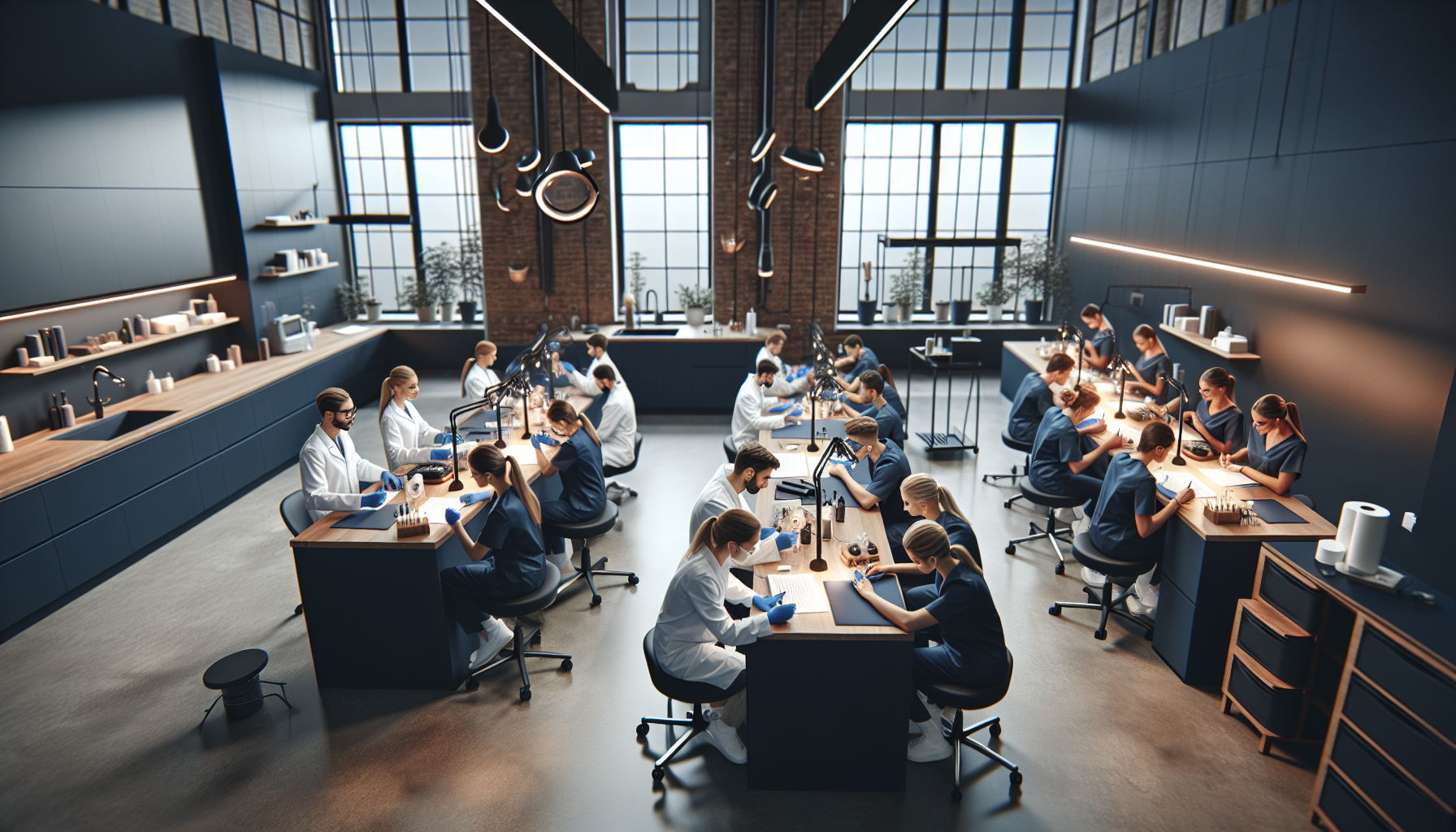
Aesthetics & Dermal Sciences Industry Workshop
Workshop Workshop Level – Pre
  • LAPT-ADS-WS
  • Workshop Stage
  • 60h / 1 months
  • 100 total marks
  • Pass: 50 marks (50%)
  • Validity: Lifetime
Enrol Now View Brochure
AwardWorkshop
Global LevelWorkshop Level – Pre
Duration60h / 1mo
Total Marks100
Pass Mark50 (50%)
Subjects6
Chapters18
Classes72

About This Certification

Introduces the aesthetics and dermal sciences industry to complete beginners. Covers professional enhancement services, basic hygiene and safety, client care fundamentals, and the LAPT certification pathway.

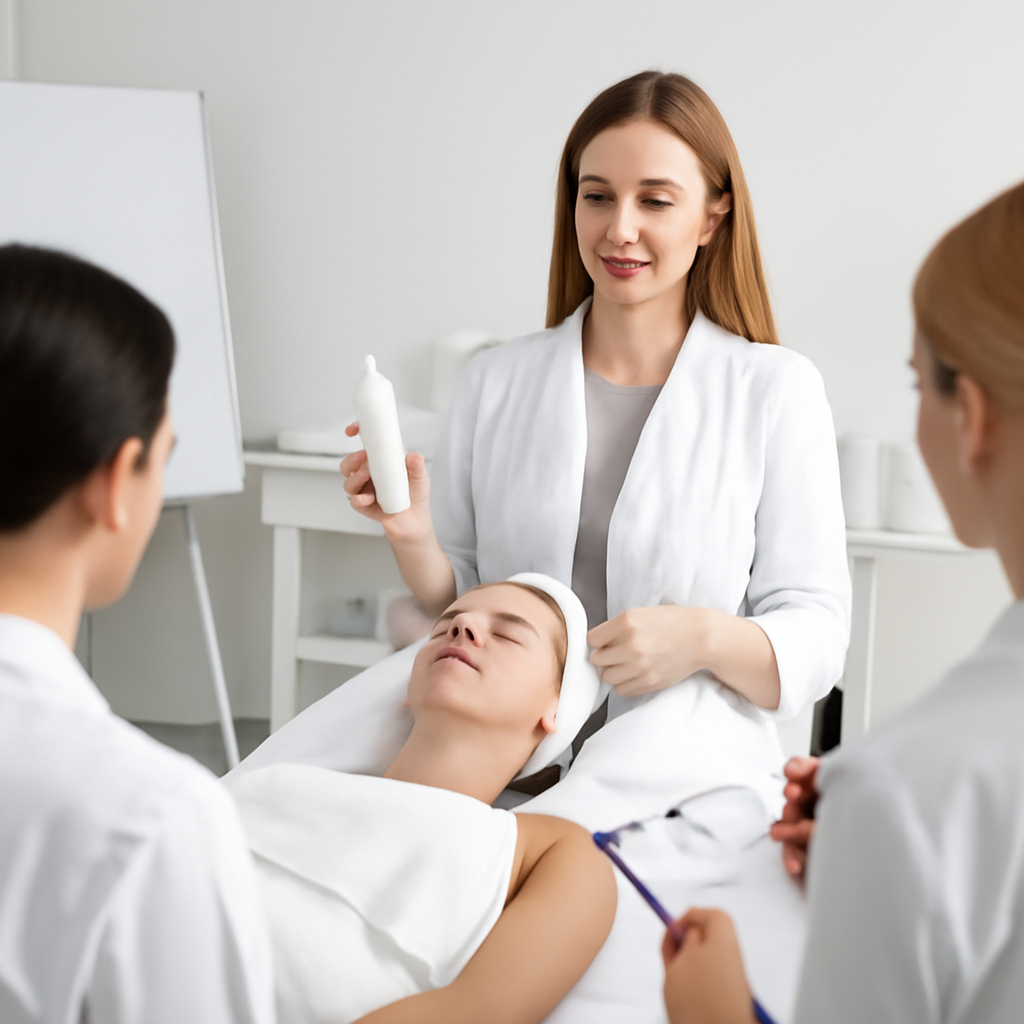
A hands-on introductory workshop for beginners and career changers. Participants observe and assist in a real aesthetic environment, building confidence before enrolling on a full certification pathway. No prior experience required.

Who Is This For?

Individuals with no prior experience considering a career in beauty enhancement — school leavers, career changers, and health and wellness professionals exploring a new specialism.

What You Will Learn

Understanding of the aesthetics and beauty enhancement industry landscape
Awareness of professional salon hygiene and safety standards
Ability to assist with client preparation and welcome procedures
Basic knowledge of cosmetic product categories and their uses
Understanding of professional client care and communication principles
Familiarity with the LAPT certification pathway from Workshop to Executive Level

Course Curriculum

6 subjects • 18 chapters • 72 classes • 60 total hrs
01
Familiarity with the LAPT certification pathway from Workshop to Executive Level
3 chapters • 12 classes • 10 marks • 6h
Understanding the LAPT Certification Pathway 4 classes
1.1 Exploring the LAPT Certification Framework
1.2 Navigating the Workshop Level Requirements
1.3 Advancing to the Practitioner Level in Aesthetic Sciences
1.4 Strategizing Your Path to Executive Certification
Key Competencies in Aesthetics & Dermal Sciences 4 classes
2.1 Understanding Key Dermal Science Competencies
2.2 Identifying Core Aesthetic Practices
2.3 Applying Dermal Science Knowledge to Practical Scenarios
2.4 Evaluating Competency Gaps for Certification Progression
Advancing to Executive Level Certification 4 classes
3.1 Understanding the Executive Level Certification Requirements
3.2 Navigating the LAPT Certification Pathway
3.3 Mastering Key Competencies for Executive Certification
3.4 Planning Your Transition to Executive Status
02
Understanding of professional client care and communication principles
3 chapters • 12 classes • 15 marks • 9h
Principles of Effective Client Communication 4 classes
1.1 Exploring the Fundamentals of Client Communication
1.2 Mastering Active Listening Skills in Client Interactions
1.3 Utilizing Empathy to Build Strong Client Relationships
1.4 Applying Effective Communication Techniques in Practical Scenarios
Techniques for Personalized Client Consultation 4 classes
2.1 Building Rapport: Establishing Trust with Clients
2.2 Identifying Client Needs: Effective Questioning Techniques
2.3 Creating a Personalized Consultation Plan
2.4 Communicating Recommendations with Clarity and Empathy
Managing Client Expectations and Feedback Responsibly 4 classes
3.1 Establishing Clear Client Expectations from Initial Consultation
3.2 Techniques for Effective Client Communication and Engagement
3.3 Handling Client Feedback Positively and Constructively
3.4 Implementing Strategies to Manage and Align Expectations
03
Basic knowledge of cosmetic product categories and their uses
3 chapters • 12 classes • 15 marks • 9h
Understanding Cosmetic Product Categories 4 classes
1.1 Exploring Cosmetic Product Categories: An Overview
1.2 Identifying the Functions of Skincare Product Types
1.3 Understanding Formulations: Key Ingredients in Cosmetics
1.4 Matching Products to Skin Needs: Practical Application
Active Ingredients in Cosmetics and Their Uses 4 classes
2.1 Understand Key Active Ingredients in Cosmetics
2.2 Explore the Functions and Benefits of Common Actives
2.3 Compare and Contrast Different Types of Active Ingredients
2.4 Evaluate Suitable Actives for Specific Skin Concerns
Selection and Application Techniques for Cosmetic Products 4 classes
3.1 Understanding Cosmetic Product Categories
3.2 Identifying Suitable Products for Different Skin Types
3.3 Mastering Application Techniques for Optimal Results
3.4 Evaluating Product Performance and User Satisfaction
04
Ability to assist with client preparation and welcome procedures
3 chapters • 12 classes • 15 marks • 9h
Understanding Client Needs and Expectations 4 classes
1.1 Identifying and Understanding Client Expectations
1.2 Building Rapport to Assess Client Needs
1.3 Communicating Effectively to Clarify Client Requirements
1.4 Demonstrating Best Practices in Client Reception and Preparation
Client Preparation Techniques for Aesthetic Procedures 4 classes
2.1 Understanding Client Needs and Expectations
2.2 Implementing Effective Client Consultation Techniques
2.3 Preparing Treatment Areas for Client Comfort and Safety
2.4 Mastering Client Welcoming and Preparation Protocols
Professional Client Welcome and Interaction Protocols 4 classes
3.1 Understanding the Importance of First Impressions
3.2 Mastering Client Preparation Techniques
3.3 Conducting a Professional Client Welcome
3.4 Enhancing Client Interaction with Effective Communication
05
Awareness of professional salon hygiene and safety standards
3 chapters • 12 classes • 20 marks • 12h
Understanding Salon Hygiene Protocols and Regulations 4 classes
1.1 Identifying Key Salon Hygiene Principles
1.2 Exploring Regulations for Safety Compliance
1.3 Implementing Effective Cleaning Protocols
1.4 Evaluating Risk Management in Salon Settings
Implementing Safety Practices for Aesthetic Procedures 4 classes
2.1 Understanding Core Principles of Salon Hygiene
2.2 Identifying Potential Safety Hazards in Aesthetic Procedures
2.3 Applying Standard Precautions and Safety Protocols
2.4 Evaluating and Improving Salon Safety Practices
Advanced Risk Management and Emergency Procedures in Salons 4 classes
3.1 Understanding Salon-Specific Risk Factors
3.2 Identifying and Assessing Potential Hazards
3.3 Implementing Effective Emergency Procedures
3.4 Evaluating and Updating Safety Protocols
06
Understanding of the aesthetics and beauty enhancement industry landscape
3 chapters • 12 classes • 25 marks • 15h
Historical Evolution and Current Trends in Aesthetics and Beauty Enhancement 4 classes
1.1 Tracing the Roots: The Origin of Aesthetics and Beauty Enhancement
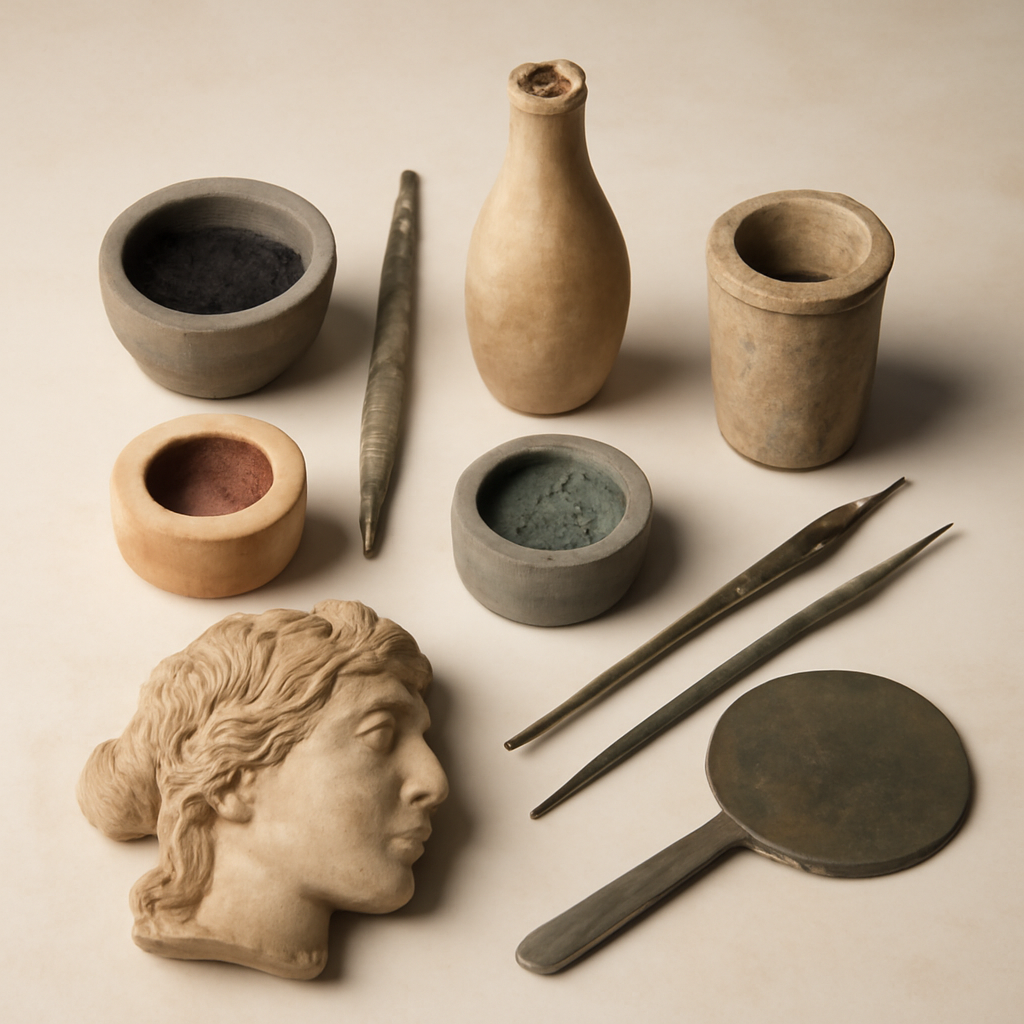
## Lesson Overview: This lesson, 'Tracing the Roots: The Origin of Aesthetics and Beauty Enhancement', aims to provide foundational knowledge regarding the historical context of beauty practices and their evolution over time. Understanding this landscape is crucial for aspiring professionals in the beauty enhancement industry, as it equips them with a comprehensive perspective on current trends and future innovations. ## Delivery Tips: 1. Use engaging visuals such as slides or historical artifacts (photos) to provide context for discussions and enhance retention. 2. Foster an inclusive environment by encouraging questions and input from all students, ensuring they feel comfortable contributing to discussions. 3. Incorporate multimedia resources (videos or documentaries) about beauty practices across cultures to enrich the learning experience. 4. Encourage students to reflect on their experiences with beauty practices or products to create personal connections with the material. 5. Allow for flexibility during lectures, adapting the pacing depending on student engagement and curiosity about specific topics. ## Common Misconceptions: 1. **Misconception:** Ancient beauty practices were inferior to modern techniques. **Correction:** Highlight that many ancient methods were sophisticated and often served multiple purposes, including spiritual and cultural significance, and laid the groundwork for modern innovations. 2. **Misconception:** All cultures have the same perceptions of beauty. **Correction:** Emphasize the rich diversity of beauty ideals across cultures and how they shape practices in unique ways. Incorporate examples from different cultures to illustrate these distinctions. 3. **Misconception:** Modern beauty is purely driven by marketing. **Correction:** Discuss how consumer awareness and globalization have led to more informed choices and fostered an appreciation for historical practices, which can coexist with marketing influences. ## Discussion Prompts: 1. How do you think ancient beauty rituals can be integrated into modern beauty services? 2. In what ways do historical beauty practices challenge modern ideals of beauty? 3. How can understanding the history of beauty enhance our approach to inclusivity in the industry today? ## Timing Breakdown: - Introductory Lecture: 10 min - Group Activity on Historical Ingredients: 15 min - Observation and Demonstration of Renaissance Recipes: 10 min - Pair Debate on Beauty Techniques: 20 min - Individual Brainstorming on Future Trends: 10 min - Conclusion and Q&A: 10 min ## Differentiation: For advanced learners: Encourage them to delve deeper into the scientific aspects of ingredients and their historical context. Assign projects that require them to research and present on lesser-known ancient practices. For those struggling: Provide guided notes and visual aids to support comprehension, and allow for peer collaboration during group activities for additional support. ## Assessment Guidance: Monitor student participation during discussions and groupwork to gauge understanding. Use the debrief questions to stimulate reflection and assess their ability to connect historical practices with modern applications. Additionally, consider quizzes or short written reflections after the lesson. ## Extension Activity: Advanced students can create a detailed presentation or research paper on a specific ancient beauty practice, exploring its evolution, cultural significance, and modern adaptations. They can present their findings to the class, encouraging deeper exploration of the topic.
1.2 Transformative Eras: Major Milestones in Aesthetic Practices
1.3 Mapping the Present: Contemporary Trends in Beauty Enhancement
1.4 Predicting the Future: Emerging Innovations in Aesthetic Science
Regulatory Framework and Ethical Considerations in Aesthetics 4 classes
2.1 Explore the Regulatory Bodies Governing Aesthetic Practices
2.2 Analyze Key Legislation Impacting the Aesthetic Industry
2.3 Examine Ethical Considerations in Beauty Enhancement Services
2.4 Apply Regulatory and Ethical Principles to Case Studies
Technological Innovations and Their Impact on Beauty Techniques 4 classes
3.1 Exploring Technological Advances in Aesthetic Treatments
3.2 Understanding the Impact of AI on Beauty Procedures
3.3 Analyzing the Role of Smart Devices in Skincare Routines
3.4 Evaluating the Effect of Biotechnology on Beauty Techniques

Career Outcomes

Unlock these career opportunities upon certification:

Salon or Clinic Assistant
Beauty Counter Assistant
Progression to LAPT Foundation Level Certificate

Assessment & Grading

Assessment Methods
  • Written Knowledge Check
  • Supervised Practical Demonstration
  • Participation and Attendance Log
Theory
70%
Practical
20%
Project
10%
Grading Scheme
GradeFromClassification
A 0%+ Distinction
B 0%+ Merit
C 0%+ Pass
F 0%+ Fail

Industry Recognition

LAPT Accredited
Recognised by the Aesthetics & Beauty Enhancement Professional Network
Aesthetics & Dermal Sciences Industry Workshop
Workshop Workshop Level – Pre
  • LAPT-ADS-WS
  • Workshop Stage
  • 60h / 1 months
  • 100 total marks
  • Pass: 50 (50%)
  • Validity: Lifetime
  • Beauty Industry
Enrol Now View Brochure
Enrol Now

📰 Blog Articles

Educational articles generated from this certification's lessons and chapters

Related Certifications


Chat with us Chat with us